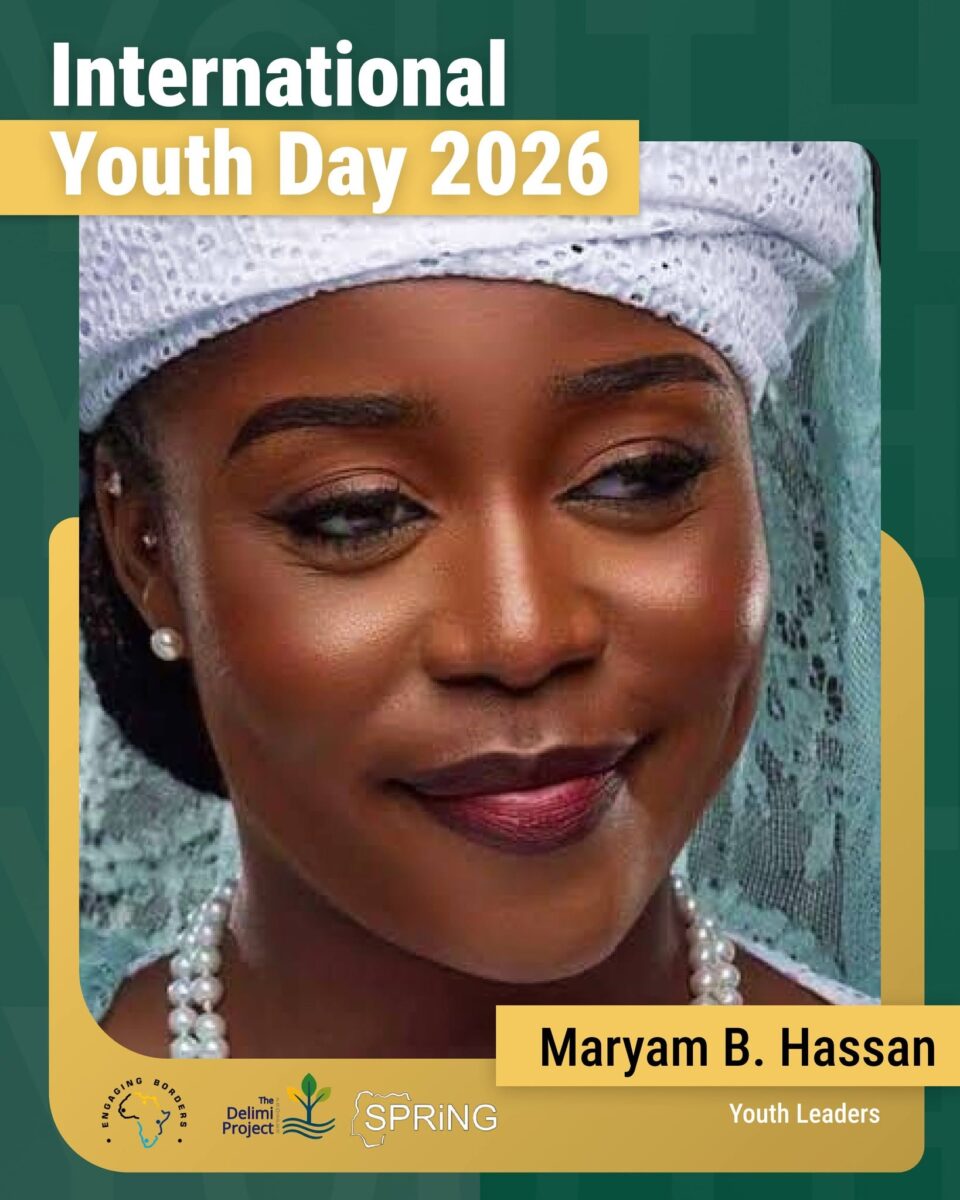

“Young people must be willing to question narratives that fuel conflict.” – Sada Malumfashi
May 18, 2026
Youth Leaders #IYD2026
August 12, 2026Steps to Unmasking Misinformation and Fake News Online
By Rahab Yusuf

During COVID-19, a forwarded WhatsApp chat made the rounds suggesting people take a mix of lemon and hot water as a cure for the illness. When fact-checked, it was discovered to be false. The proliferation of such fake news is linked to the growing use of social media. Fake and fabricated news have existed long before in the past. But social media has amplified its reach. The internet and social media have made it easy for people to share information with a large audience at a fast pace. Unlike in the past, when news sharing was undertaken only by traditional media professionals — journalists, editors, and publishers — who followed rigorous stages of verifying information, people can now easily share content without following formal processes. With just a smartphone and internet access, anyone can publish content to the public.
This shift, however, has triggered an alarming volume of unverified news and emotionally charged content online. And digital content is not confined to digital spaces alone; it moves from online to offline, influencing people’s actions and beliefs, reinforcing bias and sometimes leading to tension and conflict in society.
Unverified content carries the potential to cause health risks, disrupt peace and, if not properly managed, lead to violence. What begins as an online hashtag can move from online spaces to offline protests. News headlines shape how certain groups are perceived, often reinforcing stereotypes. Smear campaigns now easily destroy people’s legacies. Unchecked, it carries devastating consequences.
Africa Check, a journalism and fact-checking platform, defines fake news as information created with the intention to mislead by presenting false content as accurate. It differs from memes and jokes because it is disguised as credible information, pictures, or videos. Fake news is categorised into two types: misinformation and disinformation. Disinformation is deliberately created to deceive and manipulate its audience. For example, an AI-generated video of Donald Trump making an inciting statement may be circulated as authentic in order to manipulate and push a certain agenda.
On the other hand, misinformation can be shared by individuals who may not realise it is false. For instance, a family member or friend might forward a WhatsApp message, unaware that the information it contains is inaccurate.
Research shows that misinformation is one of the major global risks. It not only distorts facts but is life-threatening. Hence, the ability to discern false news is a necessary skill for everyone interacting in the digital space. By following a few simple steps, young people can protect themselves from false narratives and avoid being exploited by misinformation peddlers.
Safe ways to consume contents
Source credibility
The source of information matters significantly in determining its credibility. Trusted sources of news include established news platforms, online or offline. In Nigeria, they include Premium Times, Daily Trust, Punch Newspaper. Journalists are trusted because they are trained professionals whose primary job is ensuring people get accurate news. They follow some rigorous fact-checking processes and editorial processes before publishing their content.
Question news that makes you angry
A sign of falsehood is often presented in an emotional way so as to trigger or manipulate the audience. Some do it to get clicks and engagement to websites or pages. So the more outrageous the news, the more people rush to visit sites. If a particular news item makes you angry instantly then it should be taken with a pinch of salt.
Check the Date
Old pictures can be recycled and passed as recent events to heighten tension or push a particular narrative. To find the source of a picture, use tools like Google Reverse Image Search.
Cross-Check News Platforms
Multiple media organisations usually report accurate news. If only one outlet reports a story, its credibility is highly questionable.
For AI-Generated Pictures and Videos
Inspect body parts. Generative AI often struggles with details like extra or missing fingers, distorted limbs, or inconsistent features. In videos and audio, the voice in the video or audio should match previous recordings of the same public figure, such as the president, security chiefs, or government officials. Also check for video lighting. Does the background light match the lighting on the person’s face and body? If not, then it’s worth investigating further.
Platforms like Dubawa and Africa also publish verified and fact-checked claims on their sites.